Zeus vs Hades – Gods of War
Pragmatic Play Slot Review
 Powered by SlotsReach.com
Zeus vs Hades: Gods of War: Slot Overview
Pragmatic Play released Zeus vs Hades: Gods of War in May 2023, and it’s a slot I’ve returned to a fair few times since. The hook is obvious from the first screen: before you spin anything, you pick a side. Olympus or Hades. It’s not just a palette swap either, your choice genuinely changes how the game behaves, and that’s something I wish more developers would attempt. Olympus runs at an RTP of 96.05% with high volatility, and Hades at an RTP of 96.07% with very high volatility.
How the two modes actually differ
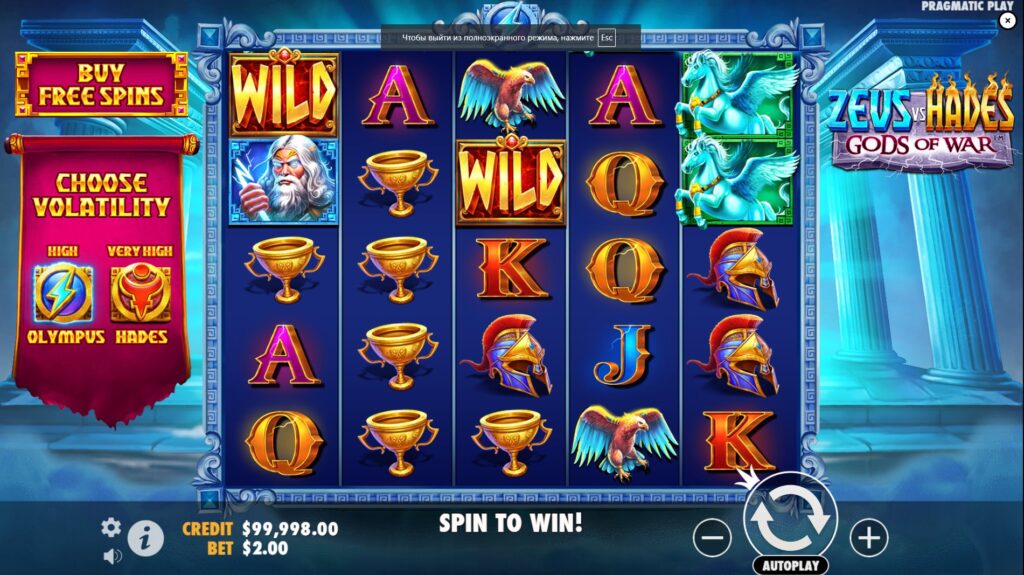
Olympus mode dresses everything in blues and white marble, and it’s the gentler of the two, though "gentle" is relative, because this is still a high-volatility game. Free spins land roughly once every 203 spins here, and the average bonus pays less than in Hades.
Hades mode turns the screen into fire and brimstone, dials the volatility up a notch, and roughly doubles your wait between bonuses, one in about 410 spins. In exchange, the average free spins round pays considerably more. If you hate long dry spells, don’t pick Hades and then complain the game is cold. That trade is the entire point of the mode.
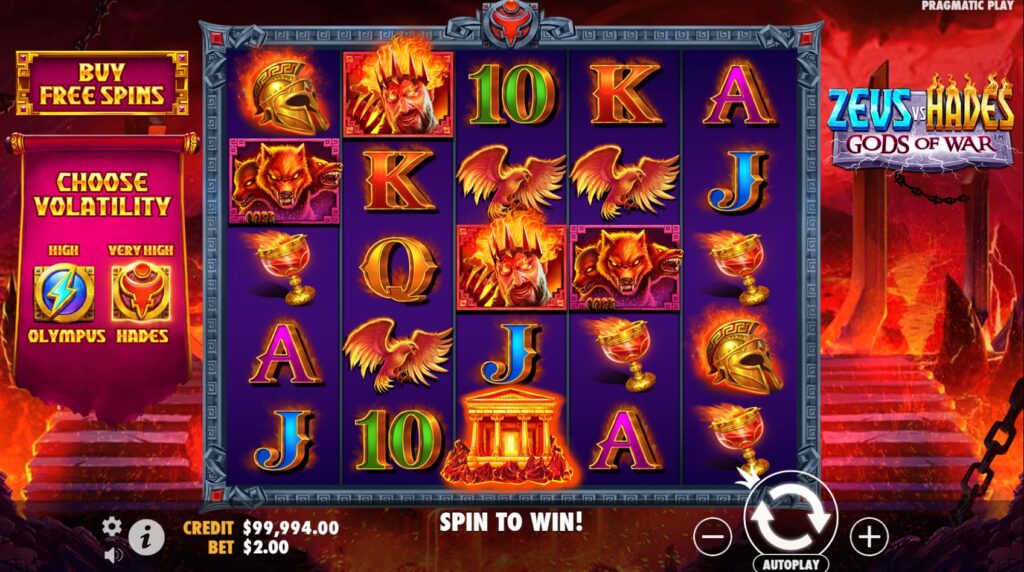
The art direction deserves credit here. The high-paying symbols change between modes (Zeus, Pegasus and an eagle on one side; Hades, Cerberus and a phoenix on the other), though the pay values stay identical. Card ranks are the same in both and pay a flat 1x for five of a kind, which is nothing to write home about.
Zeus vs Hades: Gods of War: Slot Features
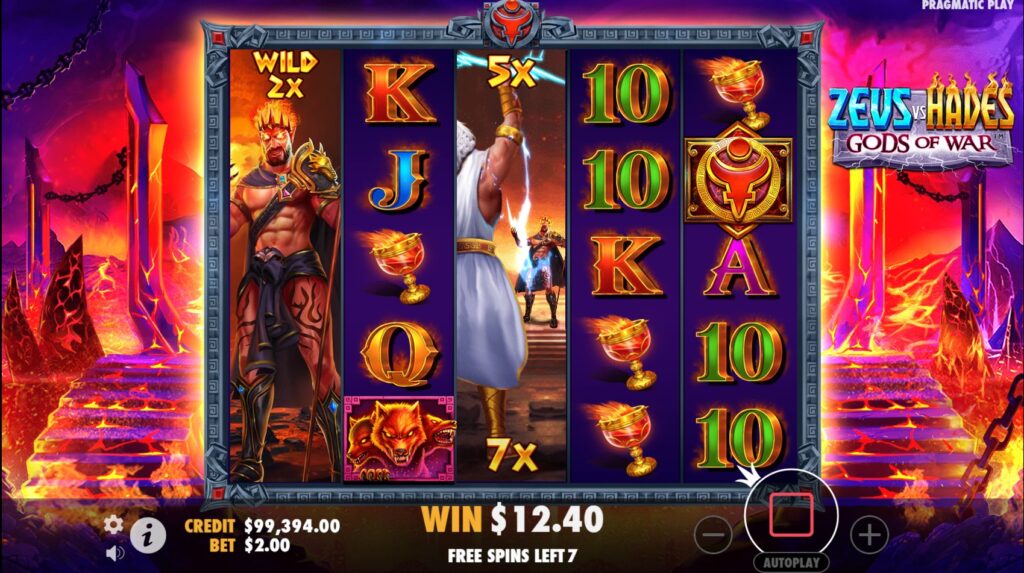
The base game has one mechanic doing almost all the heavy lifting: the Expanding Wild. It lands as a medallion, a lightning disc in Olympus, a trident disc in Hades, and if expanding it would complete a win, it fills the whole reel and picks up a random multiplier from 2x up to 100x.
Two things worth knowing. First, the reel only expands if it produces a win, so you’ll occasionally see one land and do nothing. Second, and this matters, multipliers on the same payline are added together, not multiplied. An x5 and an x10 on one line pay x15. That’s generous, and it’s where the base game’s bigger hits come from.
There’s a little Zeus-versus-Hades battle animation when the multiplier is revealed. It’s blink-and-you-miss-it stuff, and after a while I stopped noticing it entirely.
Free spins and sticky wilds
Three scatters on reels 1, 3 and 5 award 10 free spins. No retrigger, which some players will find stingy, I count myself among them, mildly, but the compensation is that any Expanding Wild that lands during the round stays locked in place with its multiplier until the end.
Get two or three sticky wild reels early and the round can snowball fast. Get none by spin eight and you’re watching a formality. That’s high volatility in a nutshell, and this game doesn’t pretend otherwise. The 15,000x cap exists and the round ends immediately if you hit it, but with odds of 1 in 1,335,113 spins in Olympus (and 1 in 1,766,784 in Hades), treat it as a theoretical ceiling, not a target.
Bonus buys
Where allowed, you can buy straight into the feature:
- Olympus: 75x for standard free spins, 300x for Super (guarantees an Expanding Wild on the first spin)
- Hades: 150x for standard, 300x for Super
The RTP on these ranges from 96.01% to 96.14% depending on the option. The 300x Super is a serious chunk of bankroll for one head start, and I’d only recommend it if you’re comfortable losing that stake quickly and often.
The grid and the multipliers will be familiar from Gates of Olympus. The battling expanding wild is the same idea Hacksaw has used in its versus games.
But the dual-mode system elevates it. Being able to meaningfully choose your volatility, and switch it mid-session, adds a layer of control most slots don’t offer, and Pragmatic deserves credit for publishing the stats (hit rates, trigger frequencies, buy RTPs) to back it up.
The 15,000x figure is a ceiling, not a promise.